
Using the QI2500 on a 10-Lane Packaging Machine
Establishing Reliable Baselines Without Subscriptions or IT Involvement
The Challenge
A production facility operating 10-lane pouch packaging machines wanted to better understand machine health and establish a vibration baseline.
These machines:
- Package 10 pouches simultaneously
- Complete one full cycle approximately every 2 seconds
- Contain motors and mechanical assemblies exposed to repetitive dynamic forces
- Operate in high-throughput production environments where downtime is expensive
The facility wanted:
- A simple way to quantify machine condition
- No subscription fees
- No IT integration requirements
- No cloud dependency
- Data ownership
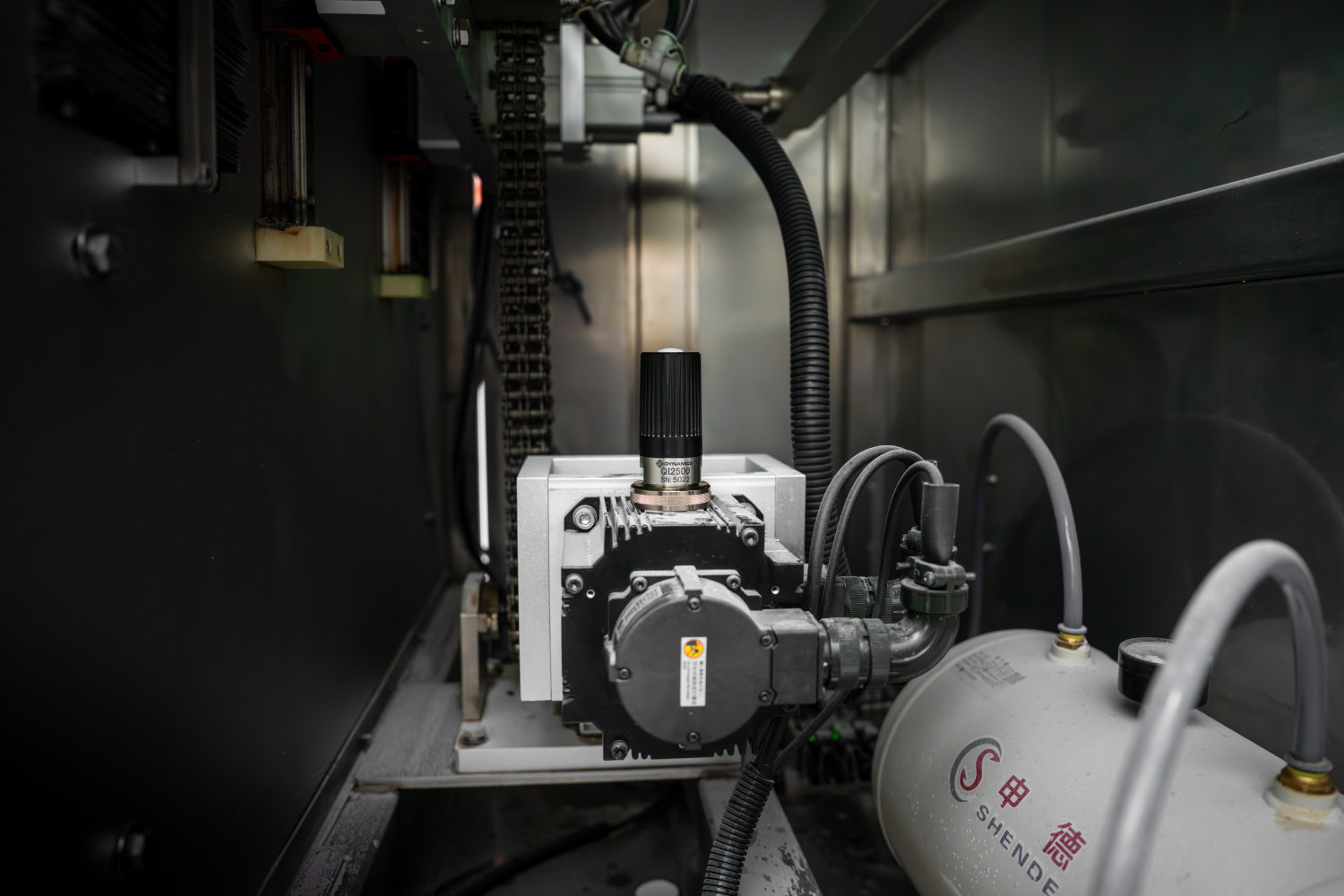
They deployed the QI2500 Vibration & Temperature Sensor directly on the motor housing.
The Approach
The QI2500 was mounted magnetically to the motor. Each reading consisted of:
- 4096 vibration samples
- FFT processing onboard
- Logged Velocity RMS (mm/s), Band-Limited Velocity, Dominant Frequency, Temperature, and Battery Voltage
The system averages the last five running readings (machine considered running when acceleration exceeds 0.4 m/s²) to prevent nuisance alarms from short-duration production events.
Two machines were evaluated:
- One brand-new unit
- One approximately one year old
What We Found
Both Machines Were Mechanically Healthy
There were:
- No bearing fault signatures
- No imbalance indicators
- No progressive vibration trends
- No abnormal heating
The machines were operating normally.
The Brand-New Machine Showed Higher Peak Values
Interestingly, the new machine produced higher short-duration vibration peaks than the older unit.
Why?
Because packaging machines are cyclic systems. Every two seconds:
- Sealing jaws engage
- Film indexes
- Pouches are cut
- Mechanical loads shift
These cyclic forces create low-frequency dynamic vibration that is completely normal for this application.
The QI2500 captured these forces accurately.
Why This Matters
Without understanding machine dynamics, high vibration numbers can look alarming.
But context matters.
On packaging machines:
- Short-duration peaks are often operational
- Consistency and trend are more important than a single spike
- Alarm logic must account for cyclic behavior
The QI2500’s 5-reading running average prevents false alarms while still detecting real changes.
Optimizing the Configuration for Packaging Machines
Based on real data analysis, the following optimized configuration was recommended for packaging equipment:
- Sample Rate: 4000 Hz
- Velocity RMS High-Pass Filter: 20 Hz
- Band-Limited Velocity: 200–1000 Hz
This configuration:
- Reduces sensitivity to low-frequency structural rocking
- Focuses monitoring on actionable mechanical condition
- Produces stable and repeatable baselines
- Minimizes nuisance alerts
Recommended Alarm Thresholds
For 10-lane packaging machines:
- Yellow Alert: ~15 mm/s (5-reading average, running-only)
- Red Alert: ~25 mm/s (5-reading average, running-only)
These thresholds reflect real operating behavior rather than generic motor standards.
The Result
The facility now has:
- A quantified baseline for both machines
- Machine-specific alarm thresholds
- No ongoing subscription costs
- Full ownership of their data
- A practical monitoring solution that fits maintenance workflow
Instead of guessing whether a machine “sounds different,” they now have measurable, trendable data.
Why QI2500 Works for Packaging Equipment
Packaging machinery is not steady-state rotating equipment.
It is:
- Cyclic
- Dynamic
- Mechanically reactive
- Often lightly framed
The QI2500 allows maintenance teams to:
- Capture real machine behavior
- Separate operational forces from developing faults
- Establish meaningful baselines
- Monitor without cloud systems or IT involvement
And because there are no subscription fees, the system scales economically across multiple machines.
Final Takeaway
The goal of vibration monitoring is not to chase numbers.
It is to:
- Establish normal
- Detect change
- Act early
On cyclic packaging machines, understanding the difference between operational dynamics and mechanical failure is critical.
The QI2500 provides that clarity.
Case Study